
The First Three Months of Motherhood with ADHD: The Toughest and Most Rewarding Thing I've Ever Done
By Kirstie - CEO at Peer Practice
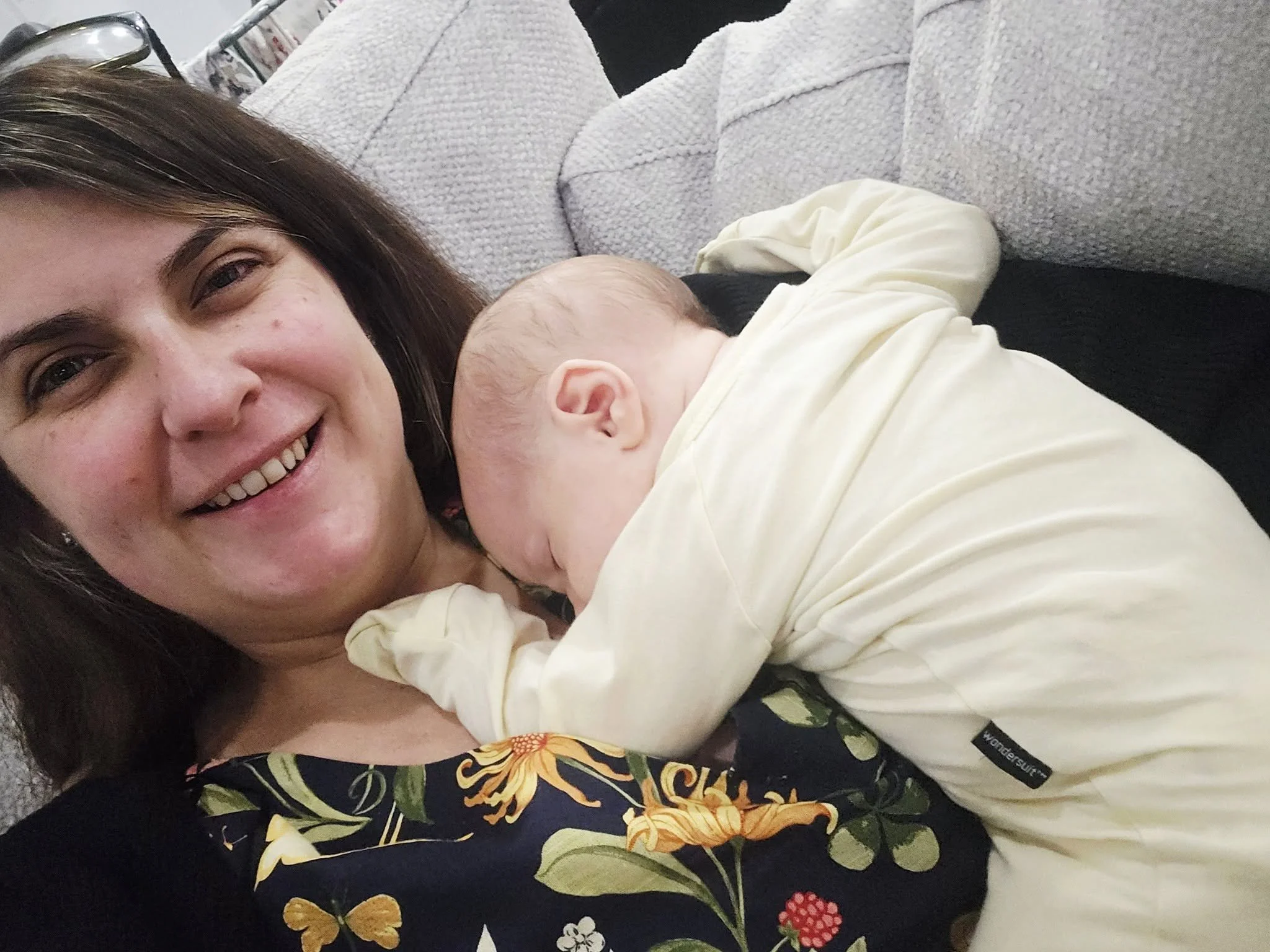
Just over three months ago, I became a mum.
I've done a lot of things in my life. I've faced challenges, taken risks, built a business, navigated mental health struggles, and learned a lot about myself along the way. But nothing, absolutely nothing, prepared me for becoming a parent.
It is easily the toughest thing I've ever done.
And somehow, at the exact same time, it's also the most rewarding.
I Didn't Know I Could Love Someone This Much
Before having my baby, people would tell me that the love you feel is unlike anything else. I thought I understood what they meant. I didn't. I genuinely didn't realise it was possible to love another human being as much as I love this little person.
Every day I get to witness tiny changes, new facial expressions, little sounds, moments of recognition, and developmental leaps. Things that might seem insignificant to anyone else feel enormous to me.
Watching my baby grow has become one of the greatest joys of my life.
The First Eight Weeks Hit Me Hard
If I could go back and tell my pre-baby self one thing, it would be this:
It doesn't matter how much you prepare, read, research, or learn. Experiencing it is completely different. I read books. I listened to podcasts. I spoke to other parents. I thought I had reasonable expectations.
Then I had a baby.
The reality was far more intense than anything I had imagined.
The sleep deprivation, the responsibility, the constant decision-making, the physical recovery, and the emotional weight of being someone's everything felt enormous.
And then there were the hormones.
Nobody really prepared me for how significant the hormonal changes would be in those first couple of months. The emotional ups and downs during the first 10 weeks were intense, and there were days when I didn't quite feel like myself.
Looking back, one of the best things I did was accept support.
Family members stepped in once a week so I could rest, shower, sleep, or simply have a break from being "on" all the time. Those little moments helped me reset my brain and regulate my emotions.
If you're expecting a baby, my advice is simple:
Build your support network before you need it.
And if support is offered, take it.
If you find yourself without a support system, find out what is available in your area and reach out. There are services and communities designed to support parents through exactly these moments, some of which I have linked further down.
Self-Care Is Not Selfish
We hear a lot about putting baby first. But here's what I've learned: You cannot look after a baby if you're not okay yourself.
Looking after ourselves isn't selfish. It is essential.
For me, I made it a priority to do one thing for myself every day.
Nothing fancy.
Most days that thing was simply taking a shower while my partner looked after the baby. I'd put music on and spend ten uninterrupted minutes resetting my brain for the potentially long night ahead.
That small ritual became an anchor.
It helped me feel human again.
ADHD and the Groundhog Day Effect
One of the biggest ADHD challenges I've experienced is the monotony. Newborn life is often a cycle of:
Feed baby.
Change nappy.
Settle baby.
Sleep.
Repeat.
Sometimes getting through that cycle in a 90-minute window.
Over and over.
And over.
For my ADHD brain, that repetitive cycle can feel like living in Groundhog Day. The days blur together so much that I've regularly forgotten what day of the week it is. In the beginning, it also significantly impacted my mental health.
One thing that has helped more than I expected is creating little pockets of dopamine throughout the day.
For me, that often looks like putting on a playlist full of 90s and 00s dance music while I'm making bottles, doing washing, or tidying up for the fifth time that day. Sometimes all it takes is a few songs to remind my brain that I'm still me, not just a milk dispenser, nappy changer, and professional “shush”-er.
The jobs still need doing, but they feel a lot less repetitive when accompanied by nostalgia, questionable dance moves, and a baby who looks mildly concerned about my singing ability.
I've also discovered that having one planned thing every day makes a huge difference. It doesn't need to be big:
Sometimes it's a coffee with a friend.
Sometimes it's a walk.
Sometimes it's having visitors.
Sometimes it's simply leaving the house.
The days I struggle most are the days where I haven't planned anything or when plans get cancelled unexpectedly.
Having something to look forward to helps break up the repetition and gives my brain a sense of structure and novelty.
My ADHD Symptoms Definitely Increased
I've also noticed that some of my ADHD symptoms became much more noticeable and increased after having a baby.
I've forgotten about wet washing sitting in the machine.
I've forgotten tasks.
I've forgotten where I've put things.
And I've definitely forgotten to take my medication more than I used to.
The mental load of caring for a newborn leaves less space in my brain for everything else.
Add sleep deprivation into the mix and it's no surprise things fall through the cracks.
One thing that has genuinely saved me is having a dryer. Before baby, I probably could have survived without one. After baby? Absolutely not.
Between spit-up, milk leaks, outfit changes, bedding changes, and the general increase in washing, I feel like I'm doing laundry at least three extra times a week.The dryer has removed a task from my already overloaded brain and that has been worth every cent.
The World's Cutest Interruptions
One thing I don't think I fully appreciated before becoming a parent is just how much babies interrupt absolutely everything. And to be fair, they have excellent reasons.
Hungry? Interruption.
Tired? Interruption.
Need a nappy change? Interruption.
Want to stare deeply into your soul at precisely the moment you're concentrating? Also interruption.
As someone with ADHD who can hyperfocus like it's an Olympic sport, this has been a huge adjustment.
Before becoming a mum, if I was focused on something, I could happily disappear into it for hours. Researching, writing, problem-solving, organising, learning something new. My brain loves locking onto a task and refusing to let go.
Babies, however, do not care that you've finally entered the productivity zone. In fact, they seem to have a sixth sense for it.
I've learned that if I start a task while the baby is asleep, there's a reasonable chance I'll get interrupted before I finish it. The washing, the email, the random deep dive into whether babies can dream, whatever it is, may need to wait… including writing this blog!
For a while I found that really frustrating. I'd feel myself getting pulled away mid-thought and struggle to switch gears.
Now, when I hear my baby wake up, I try to pause for a moment. A few deep breaths. A quick mental reset. A reminder that nothing has gone wrong. The task will still be there later. My baby won't always be this small.
That tiny pause helps me let go of whatever I've been hyperfocused on and transition into "mum mode" without carrying frustration with me. It's a small thing, but it makes a surprisingly big difference.
Taking My Medication Matters
I've also noticed a clear difference on the days I forget my ADHD medication. Personally, I find those days harder. My emotional regulation is worse. My focus is poorer. I feel more overwhelmed.
Choosing whether to take ADHD medication during pregnancy or breastfeeding is an incredibly personal decision and should always be discussed with your healthcare team.
For me, continuing treatment has been important.
Emerging evidence suggests some commonly prescribed ADHD medications transfer into breast milk at very low levels and are often considered compatible with breastfeeding when clinically appropriate. Decisions should always be made individually with your doctor, but it's important for parents to know there are evidence-based conversations available beyond simply being told to stop treatment.
One message I wish more parents heard is: A supported, functioning parent matters too.
Being Nap Trapped Is Hard
I wasn't prepared for how difficult "nap trapping" would feel. My baby loves contact naps. While they're incredibly sweet, they can also be challenging for someone with the kind of ADHD that feels like having a motor constantly running in the background. When I want to be doing things, sitting still for long periods can feel surprisingly uncomfortable.
One of the best purchases I've made has been a baby carrier. Being able to wear my baby while making lunch, walking around, or completing simple tasks has been a game changer.
And here's my practical advice: Buy two carriers. Trust me.
Babies manage to pee, spew, or leak through things far more often than you'd expect.
Some ADHD Mum Struggles Nobody Warned Me About
Talking to other ADHD mothers, there seem to be a few common experiences:
Feeling overstimulated by crying, noise, touch, and constant interruptions.
Struggling with emotional regulation when sleep deprived.
Finding it difficult to switch attention between multiple tasks.
Forgetting to eat, drink water, or take medication.
Feeling guilty for needing breaks.
Becoming overwhelmed by household chores piling up.
Hyperfocusing on researching every parenting decision.
Feeling isolated during the newborn stage.
Experiencing a loss of novelty after the excitement of birth settles into routine.
Starting a task and being interrupted seventeen times before finishing it.
Feeling irrationally annoyed when having to switch away from a hyperfocus, even when the interruption is your incredibly adorable baby.
Spending 45 minutes researching the "best" baby product only to forget what you originally opened your phone for.
Listening to the same children's song so many times that it becomes both your favourite song and your personal form of psychological warfare.
If any of those sound familiar, you're not failing. You're human.
And your ADHD brain is trying to navigate one of the biggest life changes possible.
My best piece of advice is to get to know yourself as well as you're trying to get to know your baby.
Learn your triggers.
Learn what helps you regulate.
Learn the signs that you're approaching your limit.
Create a plan before you're exhausted, overwhelmed, and trying to think through brain fog on three hours of sleep.
For me, that meant recognising when I needed a shower, a walk, ten minutes alone, a cup of tea, some loud 00s dance music, or simply handing the baby to my partner so I could take a breather.
Knowing what fills your cup isn't selfish.
It's part of being able to keep showing up for the tiny human who needs you.
When the "Best" Choice Isn't Always the Best Choice
One thing I wasn't prepared for was how much mental energy goes into decision-making as a parent. As someone who loves research and learning, I quickly found myself reading studies, recommendations, guidelines, and expert opinions on everything from sleep and feeding to development and attachment.
When you have ADHD, that research rabbit hole can become very deep, very quickly.
What I've learned over the past three months is that knowing the evidence is important, but so is understanding yourself. There are often multiple ways to raise a healthy, thriving baby.
The internet can make it feel like there is only one "right" way to do things, but the reality is that every family has different circumstances, strengths, challenges, and support needs.
I've found myself repeatedly asking two questions:
What does my baby need to thrive?
And just as importantly:
What do I need to be mentally and emotionally well enough to care for my baby?
Sometimes the answer sits perfectly in the middle.
I've realised that making parenting decisions isn't just about following a recommendation. It's about weighing up the available evidence alongside your own wellbeing, capacity, support system, and family situation. Sometimes that means making judgement calls that suit both parent and baby, rather than pursuing perfection at the expense of your mental health.
As parents, we are often encouraged to sacrifice ourselves for our children. While some sacrifice is inevitable, I've come to believe that a burnt-out, overwhelmed parent isn't the goal. A baby benefits from having a parent who is regulated, supported, rested where possible, and able to enjoy the experience of parenting.
For me, that has meant letting go of perfection and focusing on sustainability.
It has meant accepting help when it's offered.
Using tools that make life easier.
Taking my medication.
Choosing convenience when needed.
And reminding myself that looking after my own wellbeing is not in competition with looking after my baby's wellbeing.
They're connected.
The more supported and emotionally healthy I am, the better I can respond to my baby's needs, enjoy the small moments, and show up as the kind of mum I want to be.
Sometimes being a good parent isn't about making the perfect choice.
It's about making an informed choice that supports both you and your baby to thrive.
How My ADHD Actually Makes Me a Better Mum
ADHD gets talked about a lot in terms of challenges, especially when it comes to parenting. And don't get me wrong, there are definitely parts that are harder.
But something I've noticed over these first three months is that my ADHD also brings strengths into motherhood.
Pattern Recognition
My brain has always been good at spotting connections, noticing small changes, and identifying patterns that other people might miss. It's something I've relied on throughout my life and work, and now I'm seeing it show up in parenting too.
Before having a baby, I assumed newborns would be impossible to understand because they can't tell you what's wrong. What I've actually found is that over time, I've become surprisingly good at recognising the different signals my baby gives me.
The subtle cry that means they're tired.
The wriggles that mean a nappy change is needed.
The little movements that tell me they're overstimulated.
The signs that they're about to fall asleep.
The small changes in routine that signal a growth spurt, developmental leap, or that they might be coming down with something.
My ADHD brain loves looking for patterns, and a newborn is essentially one giant pattern-detection exercise. Once I stopped expecting myself to know everything immediately and started observing, I realised I was learning my baby's unique way of communicating.
Hyperfocus Can Be a Superpower
Another ADHD strength has been hyperfocus.
When something captures my interest, I can become completely immersed in it. While that can occasionally lead me down the odd Google rabbit hole at 2am, it has also helped me learn quickly and build confidence as a new parent.
When I want to understand something about my baby, I dive in. I research, observe, learn, adapt, and keep trying until I find what works. I think that curiosity has helped me become more responsive and flexible rather than getting stuck on the idea that there's only one "right" way to parent.
Creativity Helps Me Problem Solve
I've also noticed that ADHD has made me a more creative problem solver.
If something isn't working, my brain is constantly generating alternatives. Can't get baby to settle?
Let's try a different hold.
A different environment.
A walk outside.
A carrier.
A bath.
Some music.
A contact nap.
A feed.
Another feed.
A completely random thing I'd never considered five minutes ago.
Sometimes parenting feels like one giant experiment, and ADHD brains are often incredibly good at adapting and trying new approaches.
Deep Feeling Creates Deep Connection
I've always felt things deeply, and while that can be overwhelming at times, it has also helped me connect deeply with my baby.
I find myself completely fascinated by this tiny little human.
Celebrating every milestone.
Laughing at every funny expression.
Feeling genuine joy at things that might seem insignificant to anyone else.
The intensity of emotion that can be challenging in other areas of life has also allowed me to experience the incredible love and wonder that comes with becoming a mum.
It's Not Just a Challenge
There are absolutely days when ADHD makes motherhood harder.
But there are also days when I can clearly see how my ADHD helps me show up as the mum I am.
It helps me notice.
It helps me adapt.
It helps me connect.
It helps me understand my baby.
And while I wouldn't say ADHD makes parenting easier, I do think it gives me strengths that are uniquely valuable.
The longer I spend with my little one, the more I realise that being a great mum isn't about having a perfect brain. It's about understanding the brain you do have and learning how to use its strengths.
And for me, ADHD is part of that story.
If You're Struggling, Please Reach Out
Not everyone has family nearby. Not everyone has friends who can pop over and hold the baby while they have a shower. Not everyone has the village they hoped they would.
If that's you, please know that needing support doesn't mean you're failing. It means you're human. The transition to parenthood is one of the biggest adjustments most of us will ever experience. Add sleep deprivation, recovery from birth, hormonal changes, and the constant responsibility of caring for a tiny human, and it's no surprise that many parents find parts of it overwhelming.
You do not need to wait until you're at breaking point to ask for help. If you're feeling overwhelmed, anxious, low, struggling to cope, or simply not feeling like yourself, please talk to your GP, child health nurse, midwife, obstetrician, or the maternity care team involved in your pregnancy and birth.
One thing I didn't realise before becoming a parent is that support doesn't necessarily end when you leave the hospital. Many maternity services offer free postnatal support for months after birth. The hospital where I gave birth provides access to support for up to six months postpartum. If you're struggling, reach out and ask what's available in your area.
Asking for help isn't a sign that you're not coping. It's a sign that you're looking after both yourself and your baby. If you're feeling overwhelmed, please know there are supports available across Australia:
PANDA (Perinatal Anxiety & Depression Australia)
Support for parents experiencing anxiety, depression, stress, or emotional challenges during pregnancy and the first year of parenting.
📞 1300 726 306
🌐 https://www.panda.org.au
Tresillian
Free parenting support, advice, sleep and settling services, and parent education.
🌐 https://www.tresillian.org.au
Karitane
Support for parents navigating the early years, including sleep, feeding, emotional wellbeing, and parenting confidence.
🌐 https://karitane.com.au
Raising Children Network
Practical, evidence-based information about parenting, child development, sleep, feeding, and family wellbeing.
🌐 https://raisingchildren.net.au
Parentline
Free telephone counselling and parenting support services available in each state and territory.
🌐 https://www.parentline.com.au
Beyond Blue
Mental health support, information, and counselling.
📞 1300 22 4636
🌐 https://www.beyondblue.org.au
Lifeline
24/7 crisis support and suicide prevention.
📞 13 11 14
🌐 https://www.lifeline.org.au
Peer Support
Connecting with other mothers who have ADHD can be incredibly validating. Sometimes the most helpful thing is simply hearing, "Me too."
You don't have to do this alone. And you don't have to wait until things become unbearable before reaching out for support.
Final Thoughts
The first three months have been messy, exhausting, repetitive, emotional, beautiful, overwhelming, hilarious, and filled with more love than I knew was possible.
Some days I've felt completely capable.
Some days I've cried in the shower.
Some days I've celebrated finally remembering to move the washing from the machine before it developed its own ecosystem.
Most days I've done a combination of all three.
Motherhood with ADHD isn't always easy.
It means navigating sleep deprivation with an already distractible brain, managing overstimulation, learning to pause hyperfocus at a moment's notice, and accepting that some days "good enough" really is good enough.
It also means finding joy in unexpected places.
In tiny smiles.
In contact naps.
In midnight cuddles.
In dancing around the kitchen to old 00s club music while holding a baby who looks thoroughly unimpressed by your performance.
As I look at this little person growing and changing every day, I know one thing for sure:
The sleepless nights, the forgotten washing, the interrupted thoughts, the endless cycle of feeding and nappies, and the emotional rollercoaster are all worth it.
Because somehow, amongst all the chaos, I've discovered a love bigger than anything I've ever experienced before.
And while my ADHD brain still has absolutely no idea what day of the week it is, it knows exactly where it wants to be. ❤️
… now to go and hang out that washing I just remembered!